Presidential Election Triggers Market Decline and Currency Fluctuations in Poland
Poland’s second round of presidential elections concluded with a razor-thin margin, with the winning candidate receiving 50.89 percent of the vote, while the runner-up secured 49.11 percent. Voter turnout reached a record-breaking 71.63 percent, the highest ever recorded in the country’s presidential election history.
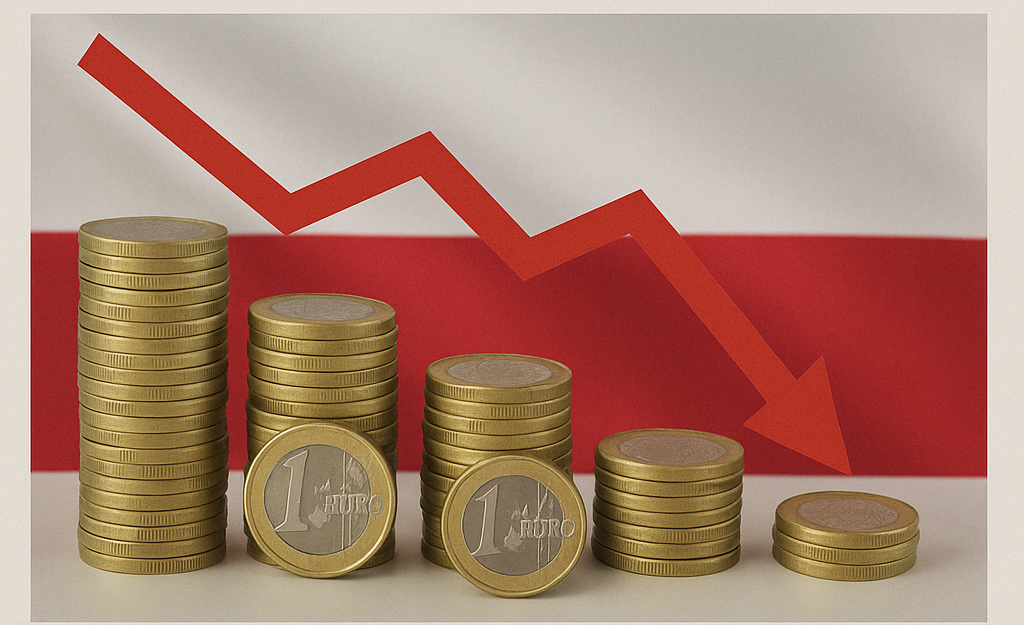
Financial markets reacted immediately to the outcome. On Monday morning, the main stock index in Warsaw opened with significant losses, falling approximately 2.5 percent. The banking sector was hit the hardest, with some of the largest institutions experiencing declines of more than 7 percent. Other major banks reported losses ranging from 4 to 5 percent.
State-controlled enterprises also saw their shares drop, typically by around 2.5 percent. Medium-sized companies experienced slightly smaller losses, but the general market trend remained negative, with roughly 60 percent of all listed firms trading in the red.
The currency market mirrored this cautious investor sentiment. The Polish zloty weakened slightly against major global currencies. The euro appreciated by 0.42 percent, reaching a value of 4.26732 PLN. The U.S. dollar rose 0.33 percent to 3.75427 PLN, while the British pound increased 0.47 percent to 5.06484 PLN. Despite the daily uptick, both the dollar and the pound have depreciated year-to-date against the zloty.
The current market reaction suggests a degree of investor unease following the political shift. While the currency changes remain within normal fluctuation ranges, the broader financial response indicates caution amid anticipated policy adjustments. Market observers will be closely watching for signs of economic direction in the coming weeks as the new administration begins its term.
Investment Outlook and Business Perspective
Poland remains one of the most attractive investment destinations in the European Union. With GDP exceeding EUR 650 billion, Poland is the sixth largest economy in the EU and the largest in Central and Eastern Europe. The country has maintained positive economic growth for over three decades, including through multiple global crises.
Foreign direct investment in Poland continues to grow, driven by the country’s strategic location, skilled workforce, EU membership, competitive costs, and improving infrastructure. Key sectors attracting investment include manufacturing, technology, business services, logistics, and financial services.
For investors considering entry into the Polish market, proper structuring of the investment vehicle is crucial. The choice between a sp. z o.o. (LLC), S.A. (joint-stock company), branch office, or joint venture depends on the investment size, sector, tax considerations, and long-term strategic objectives. Professional advisory can help optimize the structure from both operational and tax perspectives.
If you are doing business in Poland or considering entering the Polish market, Zalewski Consulting can help. Learn more about our personal income tax advisory, or contact us for a free consultation.
About Zalewski Consulting
This article was prepared by the Zalewski Consulting editorial team. We provide professional company formation, tax advisory, bank account opening, and legal advisory services in Poland. Contact us for a free consultation.
More news from Poland
Related Reading from Our Archive
Consulting services
PZC provides all the services that foreign company or individual businessmen need when doing business in Poland. If you want to learn more about the given service click on it to see the detailed description.
Read more